
Commercial Construction
S355 universal beams/columns, Z100–Z350 coated facade steels, and 1.0–2.5 m/s MRL elevators for office and retail towers that need documented load bearing capacity before topping-out.
Six sector programs · quantified scopes
Horizontal stories across commercial towers, civil infrastructure, industrial plants, energy facilities, and marine programs—each with compressive strength, fire resistance rating, flexural strength, and ride-quality requirements that our materials help quantify before bid packages freeze.
UB/UC · girders · HSS · MRL · marine plate
S355 universal beams/columns, Z100–Z350 coated facade steels, and 1.0–2.5 m/s MRL elevators for office and retail towers that need documented load bearing capacity before topping-out.
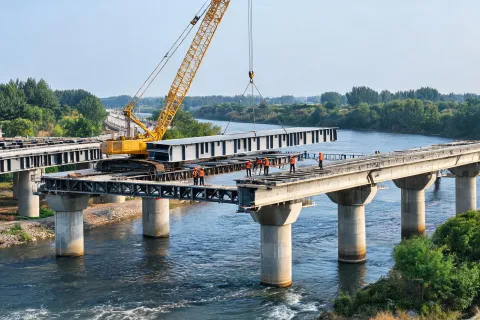
Bridge girders, port frames, and tunneling support steels with −20°C/−40°C Charpy impact toughness options for cold-climate overnight closures.
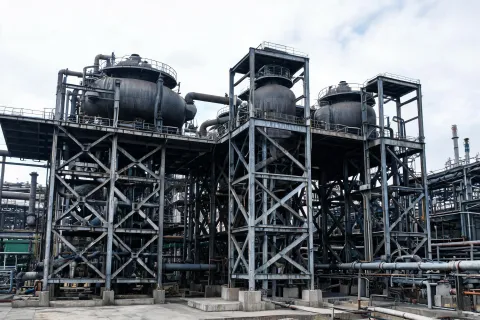
Plasma-cut plate and HSS frames (±0.5mm) for machinery mezzanines and vessels where dimensional stability and flexural strength protect alignment.
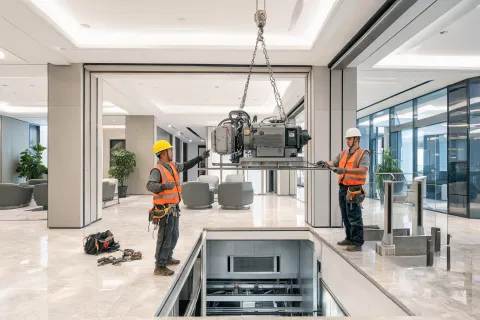
Traction, hydraulic, and accessibility platforms (630–1,600 kg) sized to shaft envelopes and local fire resistance rating interfaces.
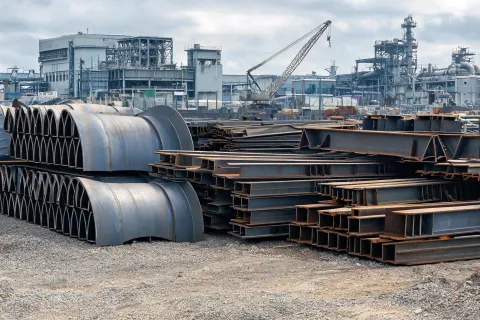
Plant frames and wind-tower plate with coating systems referenced for outdoor UV stability, air permeability at joints, and service life expectancy.
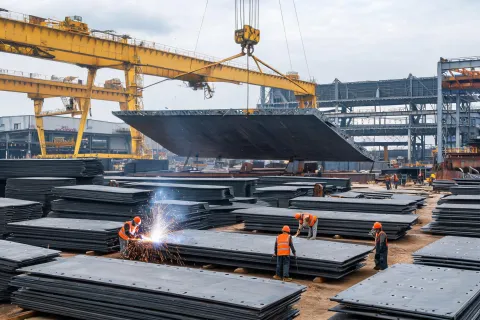
High-tensile marine steels for shipbuilding and coastal infrastructure where water absorption rate at edges and corrosion pathways dominate coating selection.
Background · process · documented result
Background: A 32-story mixed-use tower needed S355 UB/UC packages and two MRL elevator banks locked before topping-out, with fire resistance rating interfaces already sealed. Process: 3.1 mill certificates were mapped to BIM piece marks; shaft door assemblies were coordinated against the sealed drawings before controller release. Result: Shop drawings cleared without a second documentation round, and AHJ review accepted the vertical-transport fire interfaces on first pass—duty charts cited 1.6 m/s and 1,000 kg passenger banks.
Background: A coastal highway bridge required plate girders with −40°C Charpy options and coating schedules sized for marine air during overnight closures. Process: Dimensional stability checks on camber were run against erection drawings; coating TDS referenced UV stability and water absorption rate at cut edges. Result: Girders seated within the overnight window without field rework, and MTRs stayed attached to piece marks for the owner’s archive.
Background: An industrial plant mezzanine upgrade needed plasma-cut plate and HSS frames that would not disturb sealed equipment alignment. Process: Travelers documented ±0.5mm flange tolerances; flexural strength notes accompanied the substitution check when a lighter HSS was proposed against a rolled beam. Result: Field grind time dropped on critical flanges, and fire resistance rating details already sealed with the AHJ remained intact.
Across these programs, specification teams also asked for VOC emissions letters on organic coatings, recycled content percentage statements for embodied carbon worksheets, and service life expectancy notes that sit beside warranty outlines. Elevator consultants additionally requested ride-quality targets and modernization checklists that reuse existing rails where possible. When owners debate natural stone lobby cladding against steel feature stairs, we supply slip resistance coefficient context for nosings and compressive strength data for adjacent masonry so the finish package stays coordinated with the structural steel notes. Prefabricated stair and shaft modules versus traditional on-site fabrication is another recurring trade-off: prefab shortens install calendars, while stick-built stringers keep late opening changes cheaper. Domestic Buy America lots versus global specialty heats similarly force a lead-time versus cost choice—often 20–40% on nickel alloys—documented openly so estimators do not treat grades as freely substitutable.

Share climate, code edition, and vertical-transport duty so we return grade recommendations and documentation checklists.
Discuss Your Industry Scope